Nutrition Guide
Makhana Kheer Recipe – How to Make Phool Makhana Kheer at Home
Makhana kheer is one of India's most loved festival desserts — creamy, light and rich at the same time. Made with raw fox nuts roasted in ghee and simmered slowly in full-fat milk, it is easier than rice kheer and naturally gluten-free. This step-by-step guide covers ingredients, the full recipe, roasting tips and how to adapt it for vrat fasting.
What is Makhana Kheer?
Makhana kheer (also called phool makhana kheer or lotus seed kheer) is a traditional Indian milk pudding made by roasting raw fox nuts in ghee and simmering them in sweetened full-fat milk until the makhana softens and the milk thickens to a creamy consistency.
Unlike rice or vermicelli kheer, makhana kheer is naturally gluten-free, lighter on the stomach and considered auspicious — making it a popular choice for Navratri, Janmashtami, Ekadashi and other Hindu fasting occasions. It doubles as an everyday dessert or after-dinner sweet.
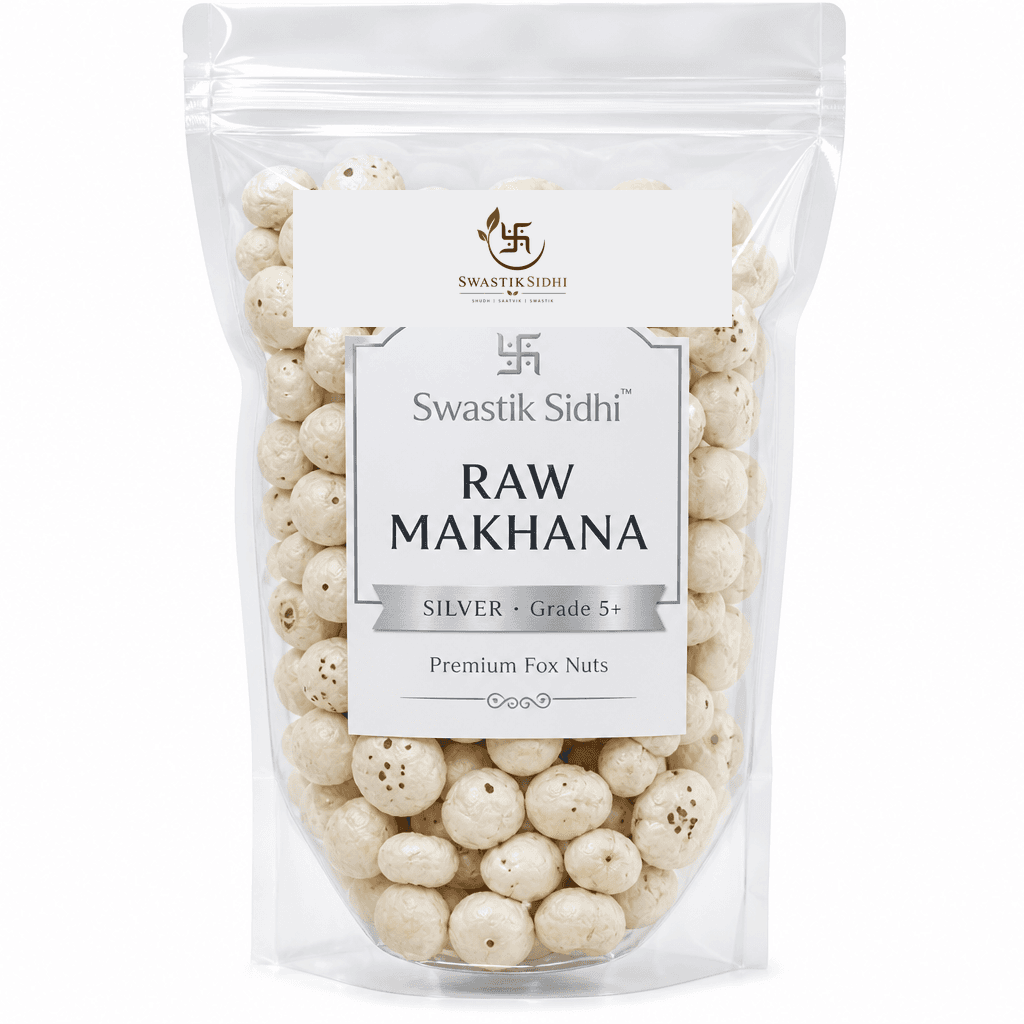
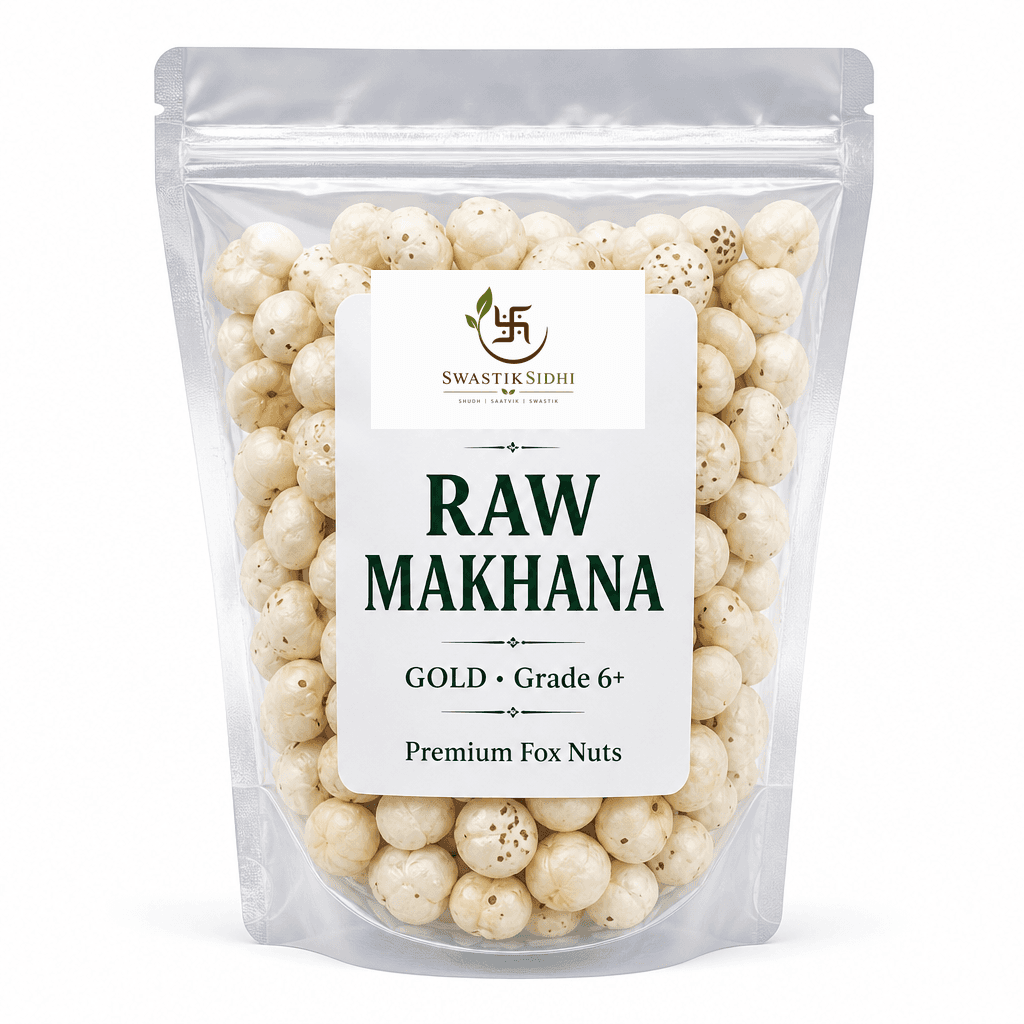
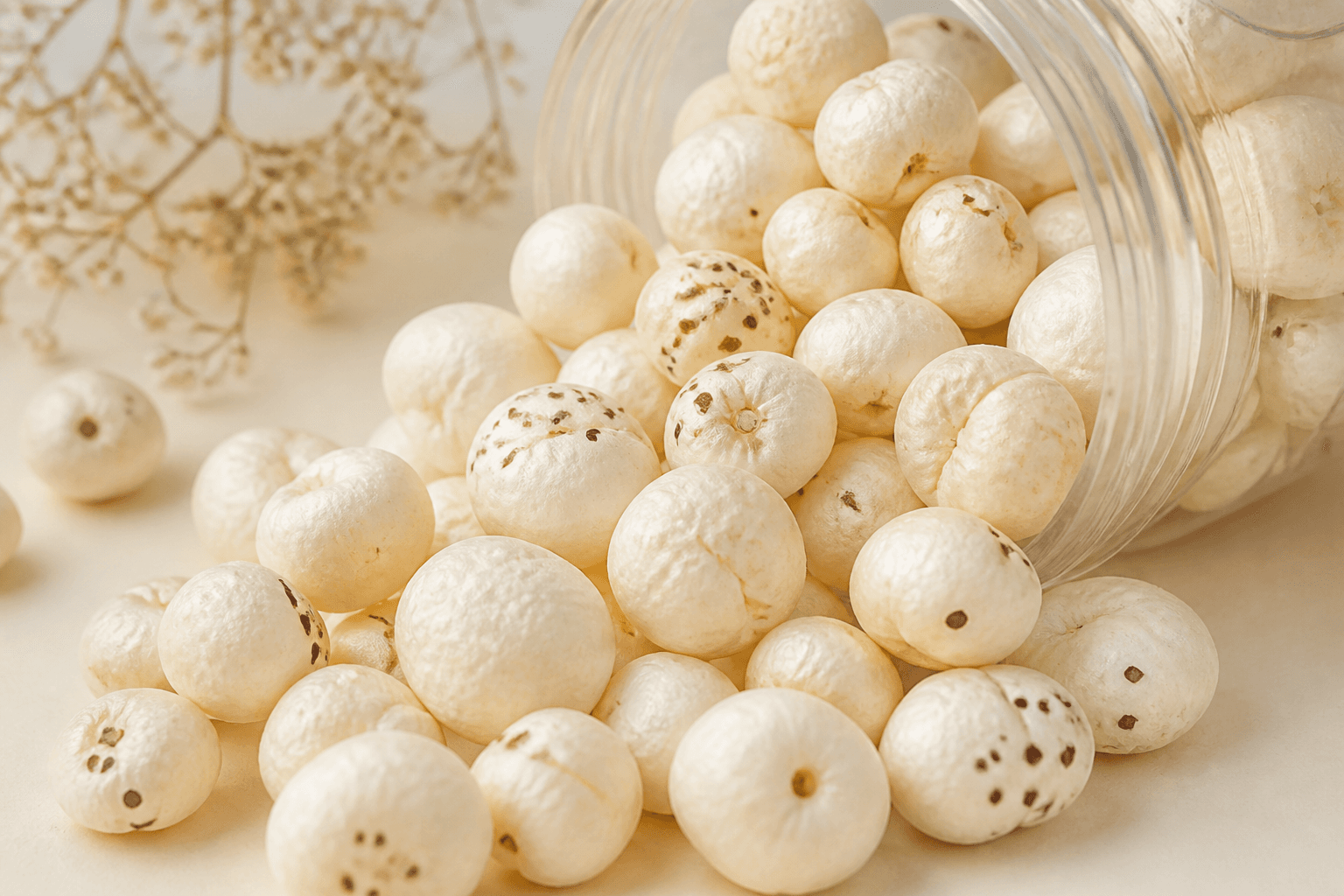
The key to great makhana kheer is starting with well-graded, properly dried raw fox nuts. Gold (Grade 6/6+) or Silver (Grade 5/5+) are ideal — their even size roasts uniformly and they absorb milk beautifully without turning mushy too fast.
Ingredients (Serves 4)
Raw makhana: 1 cup (approximately 50–60g) — Gold or Silver grade recommended for even texture.
Full-fat milk: 1 litre. Whole milk gives the creamiest result; low-fat milk will take longer to thicken.
Sugar: 3–4 tablespoons, or to taste. Substitute jaggery or mishri for a more traditional flavour.
Ghee: 1 teaspoon for roasting.
Cardamom powder: half a teaspoon, freshly ground if possible.
Saffron: a small pinch steeped in 2 tablespoons warm milk — optional but adds colour and aroma.
Garnish: 8–10 unsalted cashew halves, a few raisins and 1 tablespoon blanched sliced almonds. For vrat, confirm each ingredient is acceptable under your fasting tradition.
Step-by-Step Recipe
Step 1 — Dry roast: Heat a heavy kadhai on low-medium flame without any fat. Add the raw makhana and dry-roast, stirring continuously, for 6–8 minutes until lightly golden and crisp when pressed between your fingers. Remove and cool for 2 minutes.
Step 2 — Ghee roast the garnish: Add 1 teaspoon ghee to the same pan. Roast cashews until golden, then puff the raisins for 20 seconds. Set aside separately.
Step 3 — Crush half: Once the makhana are cool, place half of them in a cloth or zip-lock bag and crush roughly into coarse halves and quarters with a rolling pin. Keep the remaining makhana whole. The mix of whole and crushed pieces creates the best final texture — creamy yet with some bite.
Step 4 — Boil the milk: Bring the milk to a rolling boil in a heavy-bottomed pan, stirring occasionally to prevent scorching. Once boiling, reduce to medium heat.
Step 5 — Add makhana: Add all the makhana (whole and crushed) to the simmering milk. Stir, then cook on medium-low heat for 18–22 minutes, stirring every 3–4 minutes. The milk will reduce and the makhana will soften and swell. The kheer is ready when it coats the back of a spoon.
Step 6 — Sweeten and flavour: Add sugar, cardamom powder and saffron milk. Stir well and cook for another 3–4 minutes. Taste and adjust sweetness.
Step 7 — Serve: Ladle into bowls. Garnish with the ghee-roasted cashews, raisins and almond slices. Serve warm in winter or chilled after 2 hours in the refrigerator.
Tips for Perfect Makhana Kheer
Never skip dry roasting. Raw makhana must be properly roasted before adding to milk — under-roasted makhana turns slimy rather than creamy. You will hear a light crisp sound when they are ready.
Use full-fat milk. The fat in whole milk helps the kheer thicken naturally without starch. Avoid UHT or toned milk for this recipe.
Crush some, keep some whole. All-whole makhana kheer is dense; all-crushed is more like a paste. A 50-50 mix gives you the classic restaurant-style texture.
Low and slow. Rushing with high heat scorches the milk at the bottom. Medium-low heat with regular stirring gives even thickening and prevents a burnt taste.
Make it ahead. Makhana kheer thickens as it cools. Prepare it 2–3 hours before serving and add a splash of warm milk to loosen it if needed before plating.
Makhana Kheer for Navratri, Vrat & Festivals
Makhana kheer is widely accepted during Hindu fasting periods — Navratri, Ekadashi, Janmashtami, Mahashivratri and similar occasions — because makhana (fox nuts) are considered a satvik food that does not break the fast.
For vrat preparation, use rock sugar (mishri) instead of refined sugar if your tradition requires it. Replace regular cashews with vrat-appropriate dry fruits and omit raisins if your fast disallows dried fruit.
The recipe is flexible: some households add kewra water or rose water instead of saffron, or use condensed milk for a quicker, richer result. For the condensed milk version, reduce sugar to 1 tablespoon and stir in 3–4 tablespoons of condensed milk during the sweetening step.
Which Raw Makhana Grade to Use for Kheer?
Grade matters more in a kheer than in a namkeen or stir-fry, because each kernel is tasted individually. Large, uniform kernels from Gold (Grade 6/6+) or Silver (Grade 5/5+) deliver a consistent texture and a clean, mild flavour that lets the milk and cardamom shine.
Bronze (Grade 4/4++) works fine for everyday family kheer — slightly smaller kernels that cook a little faster. Avoid Chalu Mix for kheer as the mixed sizes result in some kernels being overcooked while others are still firm.
Swastik Sidhi raw makhana packs in transparent zipper pouches so you can see the kernel size and colour before opening. Order 250g to try the recipe once, or 500g/1kg if kheer is a regular household favourite.
Frequently Asked Questions
- Which grade of raw makhana is best for makhana kheer?
- Gold (Grade 6/6+) is the most popular choice — large, uniformly puffed kernels that roast evenly and absorb milk well. Silver (Grade 5/5+) works equally well at a lower price point. Avoid Chalu Mix for kheer as mixed sizes roast unevenly.
- How much raw makhana do I need for kheer for 4 people?
- One cup (approximately 50–60g) of raw makhana with 1 litre of full-fat milk makes generous kheer for 4 people. A 250g pack gives you about 4–5 batches.
- Can I make makhana kheer without sugar for diabetics?
- You can substitute sugar with a diabetic-friendly sweetener added after cooking, or a small amount of dates paste. Plain makhana has a moderate glycemic index and milk adds protein, but any sweetener changes the nutritional profile. Consult your doctor for specific dietary requirements.
- Is makhana kheer suitable for Navratri vrat?
- Yes. Makhana (fox nuts) are widely accepted as a satvik vrat ingredient during Navratri, Ekadashi and other Hindu fasting periods. Use mishri (rock sugar) and omit any non-vrat items depending on your specific fast tradition.
- How long does makhana kheer last in the fridge?
- Stored in an airtight container in the refrigerator, makhana kheer keeps for 2–3 days. It will thicken overnight as makhana continues to absorb milk — add a little warm milk and stir before serving leftovers.
- Can I make makhana kheer with condensed milk?
- Yes. Add 3–4 tablespoons of condensed milk instead of sugar and reduce cooking time slightly. This gives a richer, creamier kheer in less time. Reduce the overall sugar to 1 tablespoon or skip it entirely since condensed milk is already sweet.
- Where can I buy raw makhana for making kheer?
- Order Gold or Silver grade raw makhana in transparent zipper packs at swastiksidhi.com/shop/raw-makhana. Choose 250g to try the recipe first, or 500g/1kg for regular household use and festival cooking.
Shop Swastik Sidhi
FSSAI registered · Roasted in Darbhanga, Bihar · Pan-India delivery on makhana & sattu
Buy Raw Makhana for Kheer